The Palette Pact: Dressing Like a Crew Without Looking Like a Costume
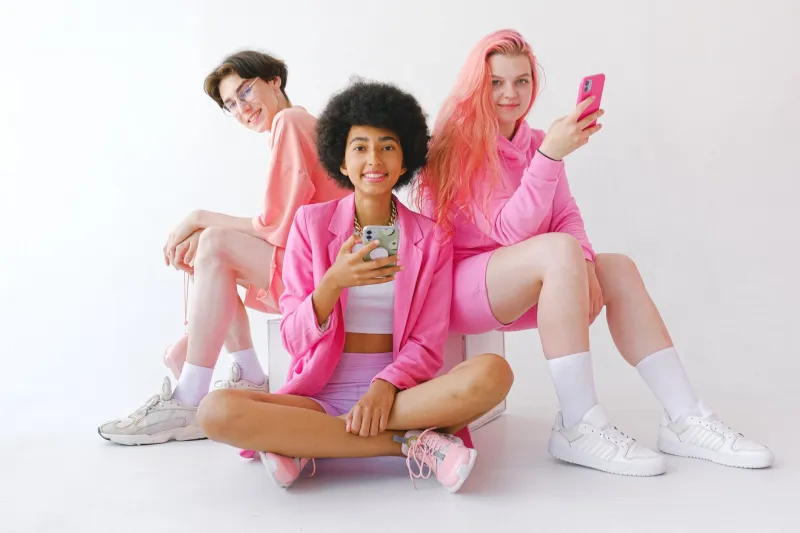
For years, the friendship bracelet did the quiet work of belonging: a little braided code on your wrist that said she is with us. In 2026, that signal is moving up the body. Friend groups are picking shared palettes, signature accessories, and low-key outfit themes that read as a team without screaming matching costumes. Think less identical hoodies, more oh, that is their color.
At GRL Gang, we are not here to turn your squad into a walking brand activation. We are here for the version of crew style that feels like a group project you actually want to join — one that leaves room for every body, every budget, and every aesthetic in the chat.
It Started With One Thrifted Jacket
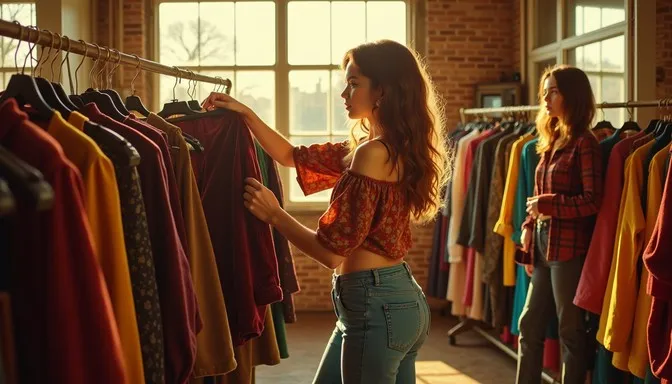
The shift did not come from a designer runway. It came from real life: one girl showing up in a faded burgundy zip-up, then another borrowing it, then a third finding a nearly identical one at a thrift store for $8. Suddenly the group had a color. Not a uniform. A clue.
Crew colors work because they are flexible. A palette can be two shades, one accent, or a whole mood. It can be forest green and silver jewelry. It can be butter yellow and dark denim. It can be black, white, and one chaotic neon. The point is not that everyone looks the same. The point is that everyone looks like they belong to the same little universe.
Crew Colors Are a Vibe, Not a Uniform
The fastest way to make group style cringe is to treat it like a school assignment with a dress code. The second-fastest way is to make everyone buy the same thing. Nobody needs five identical mesh tops in the group chat. What people need is a shared language.
Try this instead: pick a palette, not a piece. If your crew loves earth tones, everyone can interpret that differently — cargo pants, a ribbed tank, a corduroy cap, gold hoops, a beat-up tote. The connections show up in the colors and the energy, not in a receipt from the same checkout cart.
The Budget Rules, Because Rent Is Real
A crew look should never come with a secret invoice. Before anyone starts sending links, set a soft rule: use what you own first. Most friend groups already have enough black, denim, white sneakers, and random jewelry to build three separate palettes without spending a thing.
If you do shop, keep it to one anchor piece. A $15 scarf, a $12 pack of hair clips, a thrifted belt, or a single statement accessory can tie an outfit together without turning the group chat into a spending competition. Swap nights are also elite: everyone brings three pieces they are bored with, everyone leaves with something new to them. Free, social, and way more fun than a mall trip that ends in one person pretending to be chill about $90 jeans.
Fit Is the Whole Point
Here is where crew colors get real: every body and every aesthetic has to feel considered. If the plan is crop tops and low-rise everything, that is not a crew palette. That is a specific body type with a group chat. A good palette works across silhouettes — wide-leg and skinny, short and long, fitted and oversized, femme and masc and everything in between.
Also remember accessibility and comfort. Some girls cannot do tight waistbands, heavy fabrics, or sensory-unfriendly textures. Some do not want to show skin, and some do. The palette should be the throughline, not the cut of the clothes. Give people options: a tee version, a button-down version, a dress version, a layered version. Inclusion is not a buzzword here. It is the difference between a group look that feels like home and one that feels like a casting call.
How to Pick a Palette Without a Group Chat Civil War
Start with a poll, not a decree. Ask everyone to drop three colors they actually wear and one accessory they never leave the house without. You will see patterns fast. Maybe the group is secretly obsessed with chocolate brown and baby blue. Maybe everyone owns silver jewelry. Maybe the uniting factor is not color at all but a shared love of oversized blazers.
Then choose one main color, one supporting color, and one wildcard. Keep the wildcard optional. That gives the group a recognizable thread without forcing the girl who lives in all black to suddenly become a pastel person. If your crew is large, split into mini-palettes — one group does green and cream, another does denim and red — so nobody feels like they are wearing a team jersey to brunch.
The Accessory Is the Shortcut
If you want the fastest, least expensive way to test crew style, start with accessories. A coordinated hair ribbon. A specific earring shape. A tiny bag charm. A shared nail color. A patch on a jacket. These are the new friendship bracelets: small, personal, and easy to spot across a crowded school hallway or concert floor.
Accessories also solve the budget problem and the body problem at once. They do not care about your size. They do not require a full outfit overhaul. They let the girl who loves minimalism stay minimal and the girl who loves maximalism go full chaos, while both still read as part of the same crew.
When to Break the Code
The best group style has an escape hatch. Wear the palette when you want to. Skip it when you do not. A crew color should feel like an inside joke, not a loyalty test. If someone shows up in a totally different vibe, the response should be cute, not corrective.
Because the real flex is not looking identical in a photo. It is walking into a room and recognizing your people — not because they matched, but because they chose to signal the same little thing together. That is the palette pact: low stakes, high affection, and a whole lot of style.